seatbeltsupplier.comAutomotive Supply Library Request Requirement

Buyer guide

Before you send an enquiry.

Seven questions. Answer as many as you can before you write, and a general enquiry becomes a requirement that can be worked on immediately — usually in one exchange instead of five.

Why this is worth ten minutes.

Suppliers in this category spend a great deal of time asking buyers the same handful of questions, and buyers spend a great deal of time waiting to be asked them. Neither side benefits. The information below is what any competent supplier will need before they can say anything useful — so gathering it first simply moves the useful part forward.

You will not have all of it, and that is fine. An incomplete answer that is honestly labelled as incomplete is far more workable than a confident guess, because it tells the supplier where the uncertainty actually lies.

Go straight to the enquiry form

Requirement PlateDetail
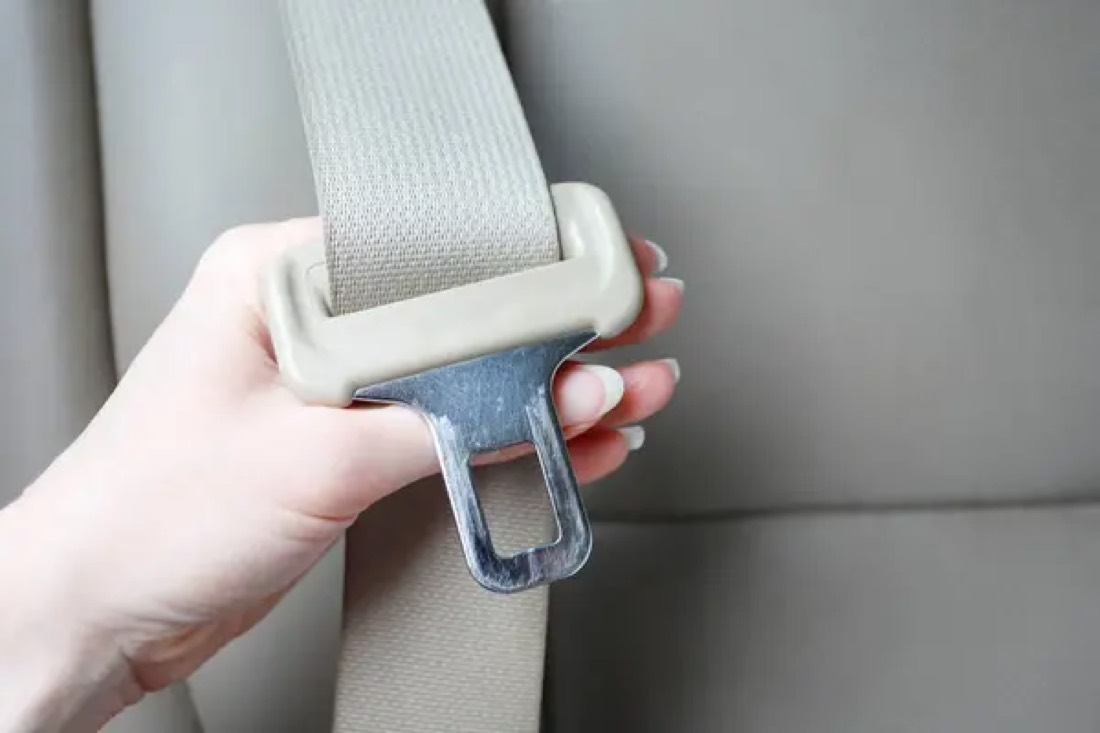
A hand holding a pale seat belt tongue against a beige vehicle seat, with the latch aperture clearly visible.
Tongue held for identificationFig. B-01
01 / The seven questionsIn order

What to have ready.

01

What vehicle or application?

Start with where the belt is going, not with what it is called.

Almost every other answer follows from this one. A belt is designed around a particular interior — the height of the anchorage points, the distance the webbing has to travel, the way it routes past the trim. Naming the vehicle, or describing the seat if there is no conventional vehicle, immediately rules out most of what could otherwise be considered.

If the application is not a standard road vehicle — a converted interior, bench seating, a specialist or working environment — say so early. Those requirements are entirely workable, but they are established from measurements and photographs rather than from a model name, and the conversation is a different one.

  • The vehicle, as specifically as you can
  • The seat and row involved
  • Whether the interior is standard or altered
  • Anything unusual about how the seat is mounted
02

What component?

A complete assembly, a single part, or a matched set — these are very different enquiries.

“Seat belt” covers a complete assembly with its retractor, a buckle receiver on a stalk, a tongue, a length of webbing, and the anchorage hardware that holds any of it in place. Buyers often want one of those and receive a quotation for another, purely because the word was doing too much work.

If you are not certain which part you need, that is a perfectly reasonable position to start from — say that instead of guessing. Describing the symptom (“the belt will not retract”, “the buckle does not release cleanly”) is often more useful than naming a part, because it points at the component without committing to the wrong one.

  • Which part you believe you need
  • Or the symptom, if you are not sure
  • Whether related parts are also involved
  • Whether an existing part is available to inspect
03

What information is available?

The part in your hand usually knows more than the description does.

Restraint components carry markings — moulded text on buckle housings and tongues, labels stitched to or printed on webbing, stamped codes on hardware. These are not always meaningful on their own, but in combination with the vehicle and the seating position they are frequently decisive.

Measurements help too, and they do not need to be precise to be useful. Approximate webbing length, the distance between anchorage points, and the width of the webbing all narrow things considerably. If you have the old part off the vehicle, that is the ideal moment to record all of this at once.

  • Any markings you can read, transcribed as they appear
  • Approximate measurements
  • Details from packaging, if any survives
  • Anything a previous supplier told you about the part
04

How many are required?

One, a batch, or a recurring volume — each shapes the answer differently.

Quantity is not simply a multiplier. A single replacement, ten units for a workshop and an ongoing requirement for a distributor are three different conversations about the same product, and they are best had as such from the start rather than discovered halfway through.

If the quantity is uncertain — likely, if you are pricing work that has not been approved yet — give the range and say it is a range. A rough figure that is honest is more useful than a precise one that will change.

  • The number of units, or a realistic range
  • Whether they are needed together or over time
  • Whether this is a one-off or likely to repeat
  • How many seats or vehicles are involved
05

Where will they be used?

Use affects what is appropriate, and what should be verified before installation.

A belt in a private car, a belt in a vehicle in daily commercial service and a belt in a specialist working environment face different demands. That does not necessarily change the part, but it changes what is worth discussing about it — and it changes what the buyer needs to verify at their end.

It also matters because requirements for restraint components differ by market and by vehicle category. Knowing where and how a component will be used lets the conversation stay on the right side of what can honestly be said about suitability.

  • The type of use — private, commercial, fleet, specialist
  • The market the vehicle operates in
  • How heavily the vehicle is used
  • Any requirement you already know you must satisfy
06

Where should they be supplied?

Destination shapes the practical half of any arrangement.

Once the product question is settled, supply becomes a logistics conversation, and destination is the first input to it. Domestic and international requirements are handled differently, and knowing which one applies avoids proposing an arrangement that turns out not to be workable.

For international requirements in particular, it is worth flagging early that documentation and import requirements are determined by the destination market, not by the supplier. Establishing what your side needs at the outset prevents a requirement being agreed and then unpicked.

  • The destination for the goods
  • Whether the requirement is domestic or international
  • Any documentation your side will need
  • Any constraints on how goods can be received
07

What supporting photographs are available?

One clear photograph regularly settles what three paragraphs cannot.

If there is a single thing on this page worth acting on, it is this. A photograph carries geometry, finish, wear and markings simultaneously, and it does not depend on both sides using the same vocabulary for the same object. It is the fastest identification tool available to a buyer, and it costs nothing.

Useful photographs are unremarkable ones: taken in good light, close enough for detail to read, and covering the part from more than one angle. A picture of the component in place in the vehicle is worth as much as one of it removed — the installation context is part of the information.

  • The tongue and the buckle, close up
  • Any visible markings, filling the frame
  • The retractor housing or stalk mounting
  • The belt as it sits in the vehicle
02 / Requirement checklistTick as you gather

The requirement checklist.

A working list rather than a form. Nothing here is submitted or stored — it is simply a way of seeing, at a glance, how complete your enquiry already is.

Requirement — readiness 0 / 7 prepared

This checklist is interactive for your own reference only. It is not connected to anything and nothing you tick is recorded or transmitted.

You do not need all seven.

Four or five is usually enough to get a substantive answer. The two that carry the most weight are the application and a photograph — between them they answer questions that are difficult to reach any other way.

If you can only send one thing, send a clear picture of the part in the vehicle, together with the vehicle and the seating position. That is a complete enquiry by itself in a surprising number of cases.

Please note

This guide helps you describe a requirement clearly. It is not fitting guidance and does not establish that a component is suitable for your vehicle. Installation and any repair of restraint systems should be carried out by a suitably qualified professional, and suitability should be verified against what applies in your market.

Requirement PlateContext
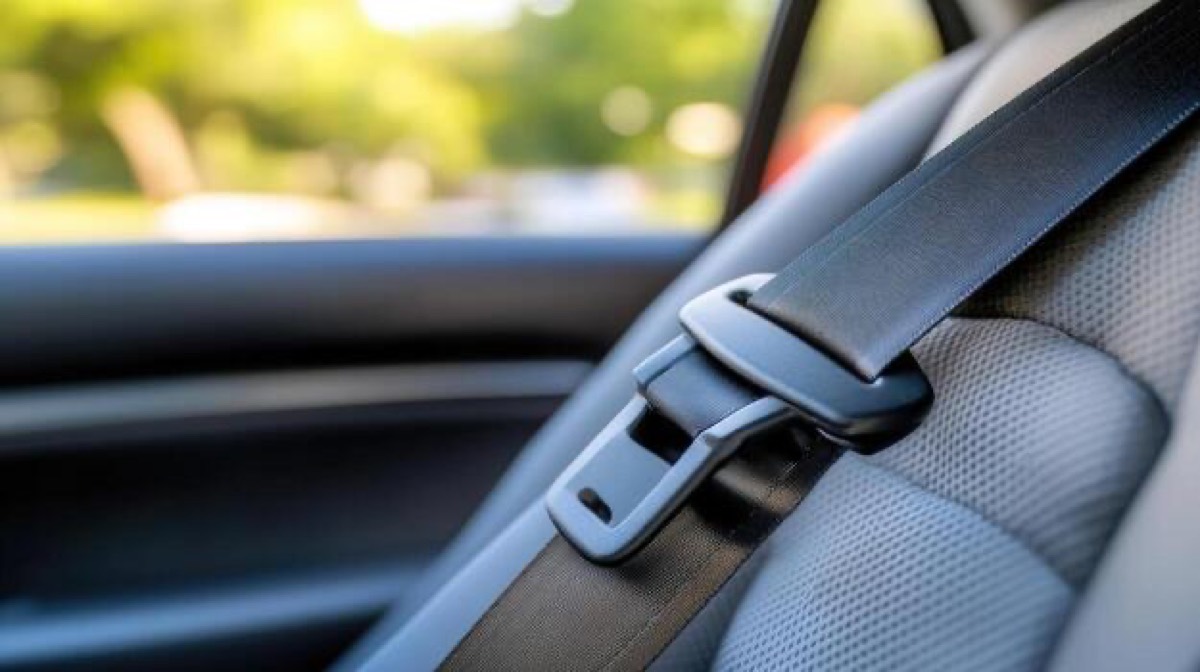
A fastened seat belt tongue seated in its buckle beside a car seat, with green foliage blurred beyond the open window.
Belt engaged, installation viewFig. B-02

Writing the enquiry

A short example.

There is no required format. Something along these lines is more than enough:

Example enquiry

“Front passenger-side belt assembly, standard saloon car, grey interior. The belt no longer retracts fully. Photographs attached showing the tongue, the buckle and the retractor housing — there is moulded text on the buckle which I have photographed close up. One unit needed for a workshop job, possibly a second later this month. Supplied to Mumbai.”

That paragraph answers six of the seven questions. It took under a minute to write, and it is enough to work from without a single follow-up.

Send a requirement

You have the list. Send what you have.

Even a partial answer moves things forward — as long as it is clear about what is known and what is not.